The right result in 3D printing starts with the right material. The most common filaments on desktop FDM printers are PLA, PETG, TPU, ABS and ASA, each with different strength, heat resistance and printability.
Quick comparison
| Material | Key trait | Heat resistance | Good for |
|---|---|---|---|
| PLA | Easy to print, matte with crisp detail, plant-based bioplastic | Low (~55-60 °C) | Desk products, decor, 3D lettering, indoor signs |
| PETG | Impact resistant, slightly flexible, handles moisture | Medium (~70-80 °C) | Functional parts, kitchen and bathroom accessories |
| TPU | Rubber-like, flexible, non-scratch, non-slip | Medium | Sleeves, bumpers, non-slip feet, gaskets |
| ABS | Rigid, heat resistant, can be acetone-smoothed | High (~95-100 °C) | Car interior and mechanical parts |
| ASA | Like ABS, resistant to UV and weather | High | Outdoor signs and parts |
Temperatures vary by brand and blend and are approximate.
Which material for which job?
- 3D lettering and indoor decor: PLA. Lots of colours, matte surface, crisp detail.
- Outdoor signs: ASA or PETG. Better against fading and heat warping.
- Soft parts that touch devices: TPU. Doesn't scratch, doesn't slip and forgives tolerances.
- In-car use: ABS or ASA. PLA can warp in a closed car in summer.
What does CraftWi use?
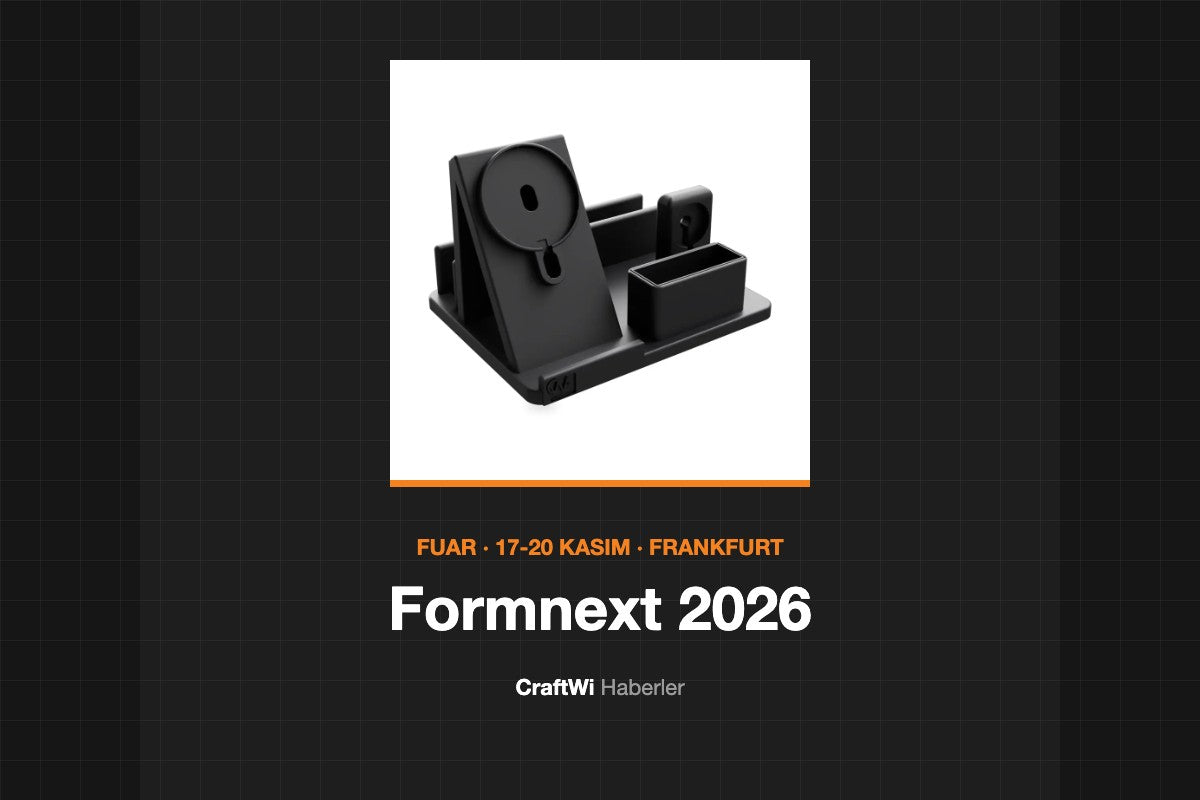
CraftWi stand bodies are made from PLA bioplastic, giving crisp detail, a matte finish and a wide colour range on the desk. In the Pro Dock and Pro Ultra Dock, the liners that hold the AirPods case and devices are flexible TPU, so nothing gets scratched. We recommend not leaving your stand in direct sun behind glass or inside a closed car.
Video: 5 filament types
The video above compares the most common filaments, print settings and uses.